El-Sayed makes history as first Muslim elected to US Senate
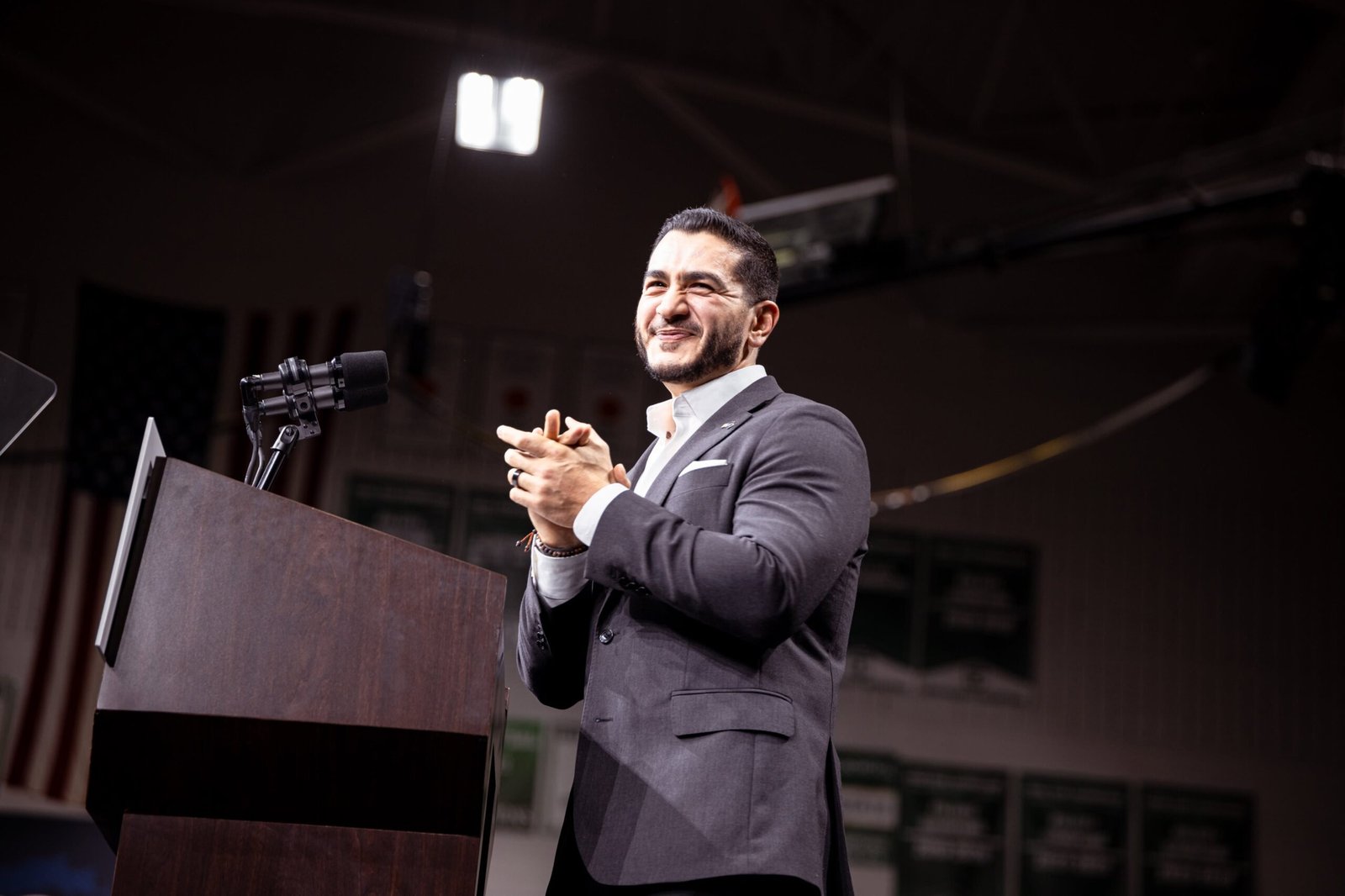
Detroit (Michigan): Abdulrahman Mohamed El-Sayed, a Democrat, has made history as the first Muslim American elected to the United States Senate after defeating Republican candidate Mike Rogers in Michigan’s closely contested Senate election.
His victory marks a historic breakthrough for Muslim representation in American politics, ending more than two centuries without a Muslim elected to the upper chamber of the US Congress.
The Associated Press (AP) called the race for El-Sayed in the early hours of Wednesday, November 4, following Tuesday’s midterm elections, with Reuters and other major news organisations also projecting him as the winner.
The 42-year-old son of Egyptian immigrants will represent Michigan in the Senate, succeeding outgoing Democratic Senator Gary Peters, who decided not to seek re-election.
Although Muslim Americans have previously served in the US House of Representatives, including former Congressman Keith Ellison and Congressman André Carson, El-Sayed will become the first Muslim elected to the Senate.
In his victory speech at the Michigan Democratic Party headquarters in Detroit, El-Sayed acknowledged the historic significance of his election and recalled how his Muslim identity had become a target during the campaign.
“They told us that someone with a name and my story, a Muslim, was unelectable. Let alone in a statewide Senate race in Michigan,” he told supporters.
He said political opponents had attempted to exploit his name and religious identity to undermine his candidacy but that voters had rejected the divisive campaign.
“They might have been pointing to my name and my faith, but we all know that my name and my faith aren’t the reason you can’t afford your gas. Not the reason you can’t afford your groceries. Not the reason you can’t see a doctor,” he said.
The senator-elect also invoked Islamic expressions of gratitude, recalling that he had consistently used Inshallah, meaning God willing, when discussing the possible outcome of the election.
“Tonight, we can turn that Inshallah into Alhamdulillah,” he said, using the Arabic expression meaning praise be to God.
El-Sayed said his victory demonstrated that religious and cultural differences should not prevent people from participating fully in American political life.
“We know that America is big enough for all of us,” he said, contrasting his campaign’s message of inclusion with what he described as attempts by opponents to divide voters.
He also reflected on his Egyptian heritage and the experiences that shaped his understanding of America, explaining that visits to his family’s native Egypt exposed him to differences in life expectancy and access to healthcare.
He said those experiences, alongside the opportunities he received through American public education and medical training, influenced his decision to become a doctor.
“I love America. But I love America enough to ask her to be America for all her kids,” he said.
El-Sayed, a former public health official who had never held elected office, campaigned on an economic and social justice platform centred on Medicare for All, reducing corporate influence in politics and making essential services more affordable.
He said his campaign was driven by the everyday struggles of ordinary Americans, recounting encounters with a mother fighting to secure medication for her children with a genetic lung disease, a grandmother seeking to protect her grandson from violence and an automobile worker demanding better wages and workers’ rights.
He also cited the struggles of a small business owner worried that another heart attack could deprive his employees and their families of their livelihoods.
“Their fights are my fight and their hopes are all of our hopes. We don’t do this work for ourselves. We do this work for each other,” he said.
He pledged to take the concerns of those communities to Washington, promising to advocate policies that would improve access to healthcare, protect workers, address environmental challenges and defend civil and reproductive rights.
The senator-elect also criticised corporate influence over American politics, alleging that more than US$350 million had been spent trying to defeat his movement during the Democratic primary and general election campaigns.
He specifically criticised the American Israel Public Affairs Committee (AIPAC), which he accused of financing efforts to undermine his candidacy.
“To AIPAC who spent $42 million against us, thank you for giving me the opportunity to beat you twice,” he said.
The Associated Press separately reported that AIPAC spent nearly US$30 million opposing him during the Democratic primary.
El-Sayed also defended his position on Palestinian rights, arguing that calls for equality and self-determination should not be characterised as expressions of hatred.
“If you believe in equal rights, peace, dignity, and self-determination, that’s not hate, it’s love,” he said.
He called for American taxpayers’ money to be directed towards domestic development rather than military operations abroad.
“Michiganders, we want our taxes spent here. For schools here, and health care here, and infrastructure here,” he said.
The campaign was marked by attacks from President Donald Trump and other Republican politicians, who questioned El-Sayed’s loyalty and alleged links to the Muslim Brotherhood, claims he denied.
In an interview with Fox News, he rejected the allegations, saying: “I have never been a member of the Muslim Brotherhood, I never will be a member of the Muslim Brotherhood.”
His Republican opponent, Mr Rogers, a former congressman and FBI agent, also challenged his positions on US military assistance to Israel and his criticism of Israel’s actions in Gaza.
The election followed a divisive Democratic primary in which El-Sayed defeated Congresswoman Haley Stevens, who had received backing from prominent party figures.
Ms Stevens subsequently endorsed Mr Rogers shortly before the general election.
El-Sayed, who previously contested the Michigan gubernatorial primary in 2018 but lost to Gretchen Whitmer, thanked campaign volunteers, donors and supporters for sustaining his political movement.
He described the victory as evidence that grassroots mobilisation could overcome the influence of wealthy interests and political establishments.
“We showed that in a battle between the money and the many, that the many really can win,” he said.
He also thanked his wife, Sarah, their daughters, parents, extended family and campaign team for their support throughout the election.
The victory is expected to strengthen Muslim American representation in US political institutions and provide a significant milestone for religious diversity and political inclusion.
El-Sayed is expected to assume his Senate seat when the new Congress convenes in January 2027.
Join our whatsapp channel for all the latest updates.
For news coverage, article publication, and advertisement, send an email to ghanaianminaret@gmail.com or reach us via whatsapp, telegram or phone call on +233266666773.