UTI Dawaah biography: tough childhood, fling with music and motherhood
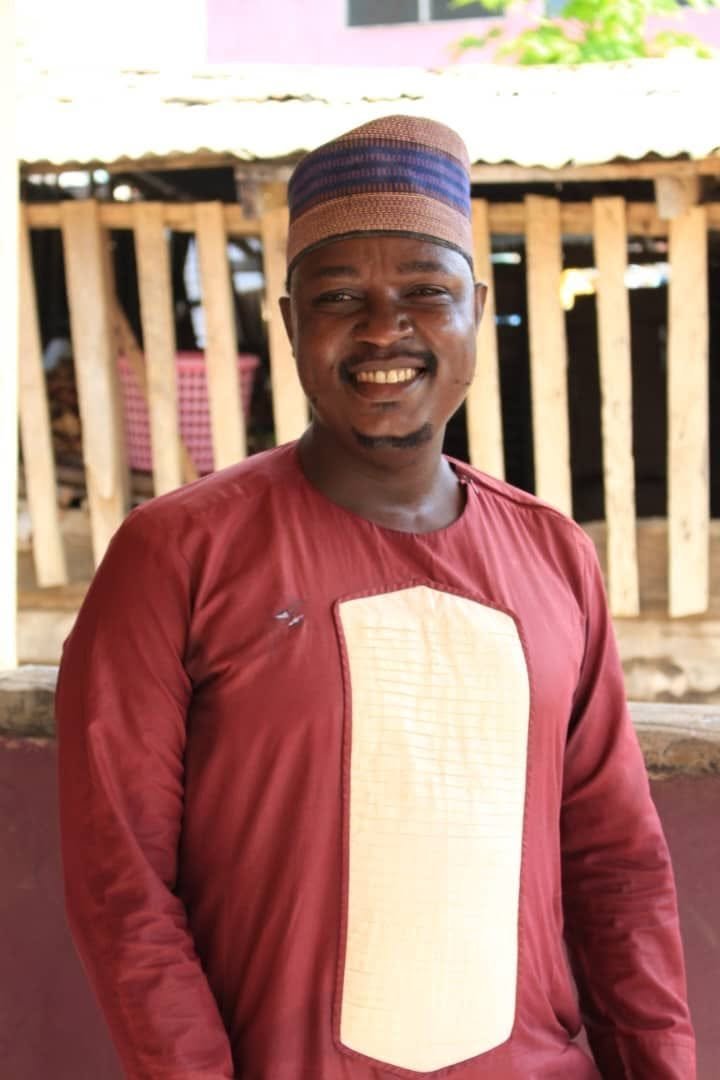
Raised by a mother who believed in the power of religious knowledge, Ishaq Alhassan Sofo has built his life around Islamic learning and dawah, drawing on personal sacrifice, persistence and lessons from years of study.
Early Life and Family Background
Ishaq Alhassan Sofo, popularly known as UTI (Untold Truth Islamic) Dawaah, was born at Old Zongo, also known as Wangara Zongo in Agona Swedru in the Central Region, and grew up at Yalwa Zongo, also in Agona Swedru.
He hails from the Mande, popularly referred to as Wangara, and the Tem, also known as Kotokoli, two minority ethnic groups in Ghana.
Unfortunately, Ishaq became an orphan at three when his father, Alhassan Swalih Sofo, passed away and his mother, Ummul Kulsum, assumed responsibility for raising him and 14 other siblings.
The “last-born” and the only boy among his siblings witnessed his family endure hardship as his mother struggled to shoulder the burden of caring for the children while suffering from a broken limb, a condition she struggled with for nine years.
He recalls a childhood in which basic necessities could be difficult to obtain. There were times when food had to be shared among family members, and a meal that might ordinarily have served one person became enough for several.
“We eat one kenkey for the whole day. It will be divided into three. We drink tea like that; nothing dey inside. Somebody will eat food and the leftover; the next day they have to throw it away…that is what they will bring us. So, that’s the family I came from [sic],” he recounted in an interview aired on Dzigbordi mosque YouTube platform.
At about 11 years old, he worked at a washing bay to help bring some money home. The experience exposed him early to the demands of survival and the responsibility of contributing to his family’s welfare.
Yet, beyond the material difficulties, his mother was determined to provide him something she considered essential: religious knowledge.
A Mother’s Influence and the Foundations of Faith
UTI describes his mother as the person most responsible for shaping his life and his commitment to Islamic learning.
She ensured that he attended Quranic classes and maintained a demanding routine that combined formal schooling with religious education. He recalls being woken at about 3 a.m. to prepare for lessons, with further learning taking place around school hours and after evening prayers.
His mother’s commitment to religious instruction extended beyond ensuring that he attended classes. She encouraged him to listen, read, memorise and develop the ability to explain what he learnt.
One of their shared interests was watching the late Ahmed Deedat, the Muslim speaker known for his presentations on comparative religion. His mother encouraged him to memorise Deedat’s arguments and reproduce them, an exercise that helped nurture his interest in religious discussions.
According to UTI, she hoped he would grow into a religious preacher. At the time, however, he had other interests, including music and table tennis.
His mother’s influence became more apparent as he grew older. Although he would eventually pursue dawah, the path was neither immediate nor free from competing ambitions.
He lost his mother in 2013, a week before his marriage. He continues to regard her sacrifices as central to the knowledge he acquired and the work he undertakes.
For him, her contribution to his life remains a legacy that he seeks to honour through his religious activities.
“Anybody that reverts by my hands, I dedicate the reward to my mom. I don’t deserve it,” he said in the interview.
Education, Music and an Uncertain Path
UTI’s formal education started at Agona Swedru ADA, then at Kwanyako Senior High School, where he studied agricultural science, before he proceeded to the University of Education, Winneba, to study social studies education with a major in geography. He also attended Madrasatu Kausariya for Islamic education.
His interests during his youth were not confined to religious studies. He was passionate about music and considered himself a talented dancehall artist. He also developed considerable confidence in table tennis, which he identifies as one of the two pursuits, alongside music, at which he excelled.
At one stage, he had dreadlocks for six years, recorded music with the popular musician Screw Face and was known among some of his classmates for his songs. Even years later, he said, some former classmates still had recordings of his music.
His mother, however, was unhappy with his involvement in music and prayed for him to find a different direction.
Eventually, he abandoned the pursuit. He recalls a point when he shaved his hair and decided not to continue with music.
“One day, I went to town. I came back. I love sleeping in the afternoon, around 1 or 2. So I slept. The hair was moving on my body like a snake. Then I woke up. I checked; it was my hair. I slept. The hair was doing something. I said, Kai, [sic]”
His interest in table tennis would dwindle after he attempted playing while unwell on a particular day. Though he ended up winning the game, it resulted in a prolonged illness that lasted almost a year. Upon recovery he heeded his mother’s advice and decided to drop the racket some 18 years ago.
These experiences marked a gradual shift away from the interests that had occupied him in his younger years. His attention increasingly turned to religious learning and the prospect of communicating what he had learnt to others.
Beginning the Dawah Journey
UTI says his public dawah activities began in 2009. He recounted that his first outreach involved a small group of about 10 people.
Narrating in the interview, he recalled meeting a young man whose parents had separated. The young man, born to a Muslim father and a Christian mother, had followed his mother and moved away from Islam.
UTI engaged him and his companions in a discussion about the religion. He says eight members of the group returned to Islam following the encounter.
The experience gave him encouragement, but his mother believed he needed more preparation before taking on the responsibilities of public preaching.
She cautioned him against rushing into the work without sufficient knowledge. Using the example of a young snake and a python, she explained that a small snake that emerged too early could easily be killed, while a python that grew before coming out could command fear and respect.
The lesson was straightforward: he needed to grow in knowledge before exposing himself to the demands of public religious debate.
UTI took the advice seriously. He continued learning from teachers and studying Islamic texts, even as he pursued opportunities to speak to the public.
His early experiences were not always welcoming. He says some mosques turned him away, while some members of the Muslim community questioned his approach to dawah, particularly his use of biblical texts in discussions about Islam and Christianity.
“At one mosque when I start Inalhamdullilah, they will say… (Rasta man wai yayi tuba),” to wit, Rasta man says he has repented.
At one point, a scholar reportedly told him to stop preaching in the Zongo community and concentrate on villages instead. The same scholar later apologised, shook his hand and prayed for him after coming to understand his work better.
The episode reflected one of the challenges UTI encountered as he sought to establish himself: persuading people not only to listen to his message but also to understand the approach through which he delivered it.
A Breakthrough and the Growth of His Public Profile
A significant opportunity came around 2011 or 2012, when a scheduled speaker failed to attend a large religious event in Agona Swedru.
According to UTI, a certain Mallam Baba Ghali recommended that UTI be given an opportunity to speak, having read his writings on Facebook.
UTI addressed the gathering, and the response encouraged him. He says the appearance led to an opportunity to secure a slot on a radio station for a whole year.
The experience helped him reach a wider audience and gave him greater confidence in his ability to communicate religious ideas publicly.
His development as a preacher, however, remained closely connected to the study he undertook outside public appearances. He continued learning from scholars and reading widely, convinced that public speaking required a firm foundation in religious knowledge.
The Teachers and Books That Shaped His Knowledge
UTI’s Islamic education developed through a combination of formal madrasa instruction, personal study and learning from individual teachers.
Among those he identifies as influences are his uncle, Professor Ishaq, who taught at Gaskiya Polytechnic in Zaria, Nigeria, and religious teachers including Malam Mustafa, Sheikh Hassan Jibril, Ustaz Mairiga, Khalifa Sheikh Qassim Tahir, Malam Abdul Hamid Adam Safo and Imam Idris Musa, the Agona West Municipal Assembly Imam.
His studies have included Islamic jurisprudence, hadith, religious etiquette and foundational texts used in Islamic learning. He also developed a particular interest in the life of Prophet Muhammad, known as the Seerah, which he says was strengthened by Sheikh Jawara’s teaching approach.
One of his favourite books is Ar-Raheeq Al-Makhtum, commonly known in English as The Sealed Nectar, a biography of the Prophet Muhammad. He also recommends works by Ahmed Deedat, including The Choice, for readers interested in comparative religion.
UTI attributes his ability to recall information and engage in religious debates to a combination of what he regards as Allah’s gift and sustained practice. He says he has spent years reading, discussing religious questions and preparing for debates.
He estimates that he can spend about six hours a day reading.
But he is cautious about treating accumulated knowledge as a licence to speak on every religious question. He warns that incomplete understanding can cause harm when a preacher addresses matters on which scholars hold differing views.
For him, the responsibility to learn does not end when a person begins preaching. It becomes even more important because people may rely on a preacher’s words to form their own understanding of religion.
He therefore encourages aspiring scholars and preachers to broaden their knowledge, remain patient and avoid allowing emotion or confidence to substitute for learning.
Financial Challenges and a Test of Faith
UTI’s work in Dawah has also been shaped by persistent financial constraints.
In an interview aired on Qari Eesa Media tv, he recalled organising religious programmes for which organisers had to provide their own chairs and hire sound equipment.
He observed that even when a programme attracted hundreds of people, the responsibility for making the event possible often rested on a small group of volunteers.
“You can do like a four-day programme, and the feesabilah you get is 30 Ghana cedis,” he said.
At one point, he sought financial support to purchase equipment that would allow him to conduct outreach without repeatedly hiring machines.
After attempts to obtain assistance failed, he and his associates tried distributing envelopes to raise funds.
The effort was particularly painful when, during Ramadan, some of the envelopes were returned with pieces of cement paper inside rather than financial contributions, he said.
UTI recalls the experience as deeply discouraging. Yet he continued to pursue the goal of acquiring equipment for his work.
Support eventually came from Baba Fabio, a benefactor based in Winneba. UTI says Baba Fabio provided GH¢3,000 in 2014, enabling him to buy loudspeakers, microphones and other equipment needed for dawah.
“He believed in me when nobody believed,” UTI said of the benefactor.
The donation made a practical difference to his outreach activities. It also became a reminder that support can come from unexpected quarters, even after a series of disappointments.
UTI says some people who had earlier returned the envelopes with cement paper later made use of the equipment acquired through the donation.
His experience illustrates the difficult balance between sustaining religious outreach and securing the resources required to carry it out.
Investing in Books and Learning
Despite the financial pressures, UTI has continued to prioritise books and learning.
He recounts receiving GH¢2,000 from an ambassador who wanted to support his work. Rather than using the money for personal consumption, he says he put it towards books, which he estimated would cost about GH¢3,000, and sent some of the books to the donor.
The donor later brought him about 10 additional books. UTI also says friends living abroad have supported his studies by sending books.
These experiences reinforce his belief that knowledge is a long-term investment. He recalls advice from Professor Zubair Ibrahim, a finance and accounting professional, who described knowledge as an anchor that could help a person secure opportunities.
UTI does not present himself as wealthy. Rather, he says he has moved beyond the severe deprivation he experienced as a child, even though financial challenges remain.
His emphasis on books reflects a wider conviction that the work of dawah must be supported by continuous study and a willingness to learn from others.
Building an Institution for Future Preachers
UTI’s ambitions extend beyond his own public engagements. He hopes to establish a modest institution with three classrooms where aspiring preachers can receive systematic instruction in Islamic knowledge and comparative religion.
The aim is to prepare people who are committed to learning and who can communicate religious ideas responsibly.
He says a supporter based in Germany donated two plots of land for the proposed project. At the time of the interview, however, the initiative had stalled for nearly a year.
He also hopes to complete a studio project to support his communication work. He says he had acquired iron rods and a tipper of sand but still needed about 80 bags of cement to complete the flooring.
These unfinished projects reflect the practical limitations that continue to shape his work. They also show that his ambitions are not limited to expanding his own audience; he wants to help prepare others to undertake religious outreach.
A Continuing Journey
UTI Dawaah’s story brings together experiences that might at first appear unrelated: a childhood marked by poverty, a mother’s determination to provide religious education, an early attraction to music and sport, years of study, difficult beginnings in public preaching and the generosity of people who helped sustain his work.
The connections between them are central to how he understands his life.
His mother’s insistence on learning helped establish the foundation for his religious pursuits. His early struggles taught him to persist in the absence of resources, while his encounters with teachers and fellow Muslims reinforced the need for humility and continuous study.
The loss of his mother remains one of the defining experiences of his life. He says he dedicates the rewards of his work to her, a personal expression of gratitude for the sacrifices she made while raising him.
His ambitions remain unfinished. The proposed training institution and studio require further resources, and he continues to see himself as a student as well as a preacher.
For UTI Dawaah, the journey is therefore not simply about becoming a recognised religious speaker. It is about acquiring knowledge, sharing it responsibly and creating opportunities for others to follow a similar path.
The boy whose mother insisted that he learn before he spoke has built his work around that lesson. His next ambition is to help ensure that the knowledge he has spent years pursuing can be passed on to others.
Join our whatsapp channel for all the latest updates.
For news coverage, article publication, and advertisement, send an email to ghanaianminaret@gmail.com or reach us via whatsapp, telegram or phone call on +233266666773.
DISCLAIMER: The Views, Comments, Opinions, Contributions and Statements made by Readers and Contributors on this platform do not necessarily represent the views or policy of the Ghanaian Minaret
Related Posts: