
Haruna Iddrisu engages Muslim leaders on Arabic and Islamic education improvement
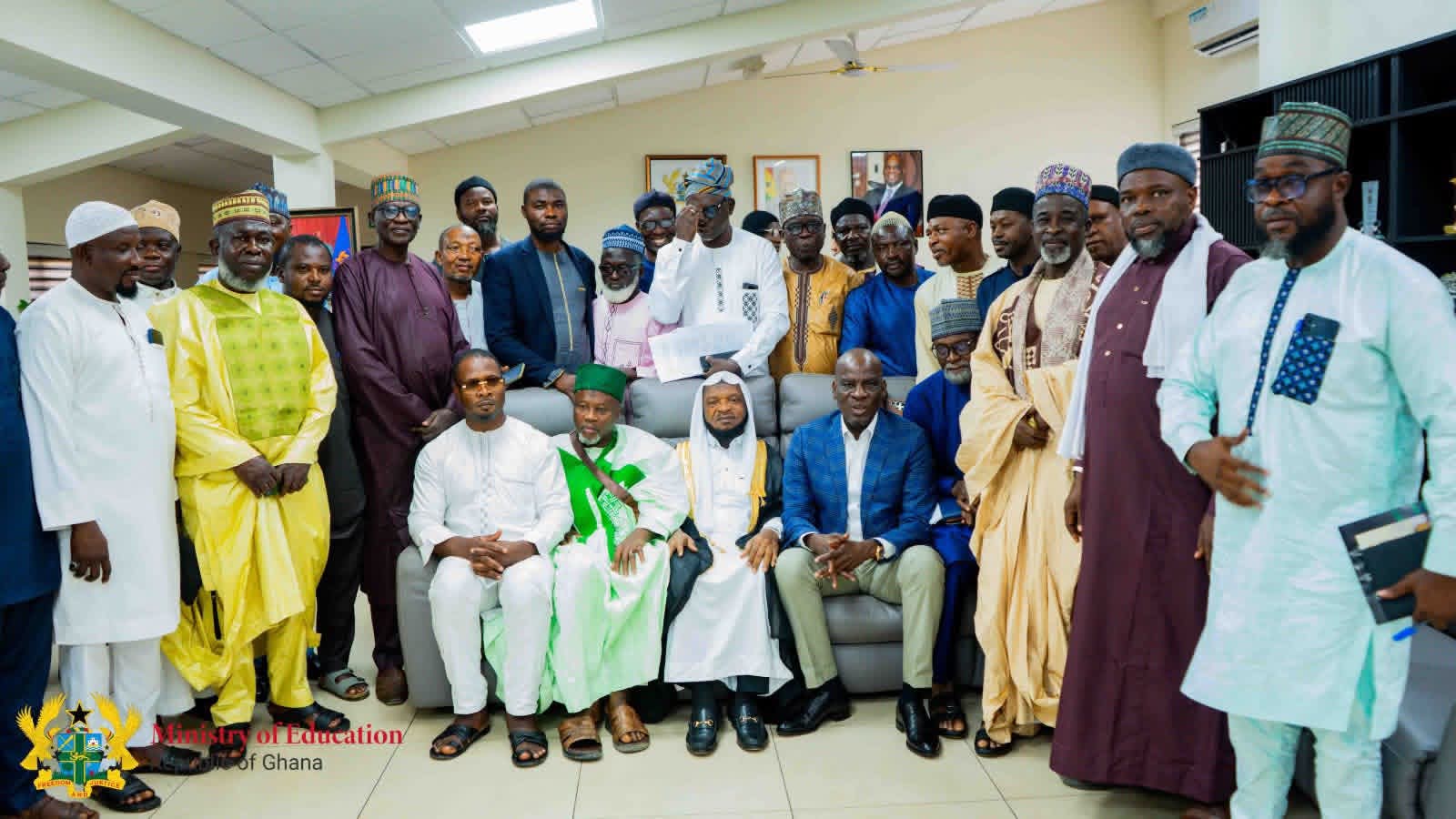
Accra: Haruna Iddrisu, the minister of education, has on Tuesday received a Muslim delegation comprising representatives of the Office of the National Chief Imam, the Conference of Regional Imams of Ghana, and the Islamic Education Unit.
The delegation was led by Dr Sheikh Amin Bonsu, the National Chairman of the Ghana Muslim Mission.
They held discussions focused on strengthening the role of government in improving the Islamic education sector.
These included curriculum improvement, infrastructure development, and other strategic interventions to enhance Islamic and Arabic education.
The minister reaffirmed the government’s unwavering commitment to ensuring the equitable distribution of educational resources across the country so that every child, regardless of background, has access to quality education and opportunities for success.
“Education remains a shared responsibility, and through partnership with faith-based institutions, we can build a more inclusive, relevant, and transformative education system for Ghana,” he said.
Education experts and Islamic scholars have consistently advocated increased investment in Islamic and Arabic education to address longstanding challenges confronting the sector in Ghana.
Key among the recommendations is greater government support through improved infrastructure, enhanced funding, and the provision of teaching and learning materials to Islamic schools across the country.
Stakeholders have also called for strengthened teacher training programmes to equip instructors with both professional pedagogical skills and advanced knowledge in Islamic and Arabic studies.
They argue that improving teacher capacity would significantly enhance learning outcomes and educational standards.
Another area of focus is the integration of Islamic and Arabic education with science, technology, engineering, mathematics (STEM), and vocational training to ensure that graduates are equipped with skills that meet the demands of the modern job market while preserving their religious and cultural identity.
Education advocates further recommend increased investment in information and communication technology (ICT), including internet connectivity, digital learning platforms, and computer laboratories, to enable students to participate effectively in the digital economy.
Efforts to harmonise Islamic education curricula with Ghana’s national education framework have also been highlighted as critical to improving academic progression and expanding opportunities for students seeking higher education and employment.
Additionally, stakeholders have emphasised the need to promote girls’ education within Muslim communities, strengthen accreditation and certification systems for Arabic schools, and deepen partnerships with international educational institutions to enhance academic exchange and resource mobilisation.
Observers believe that sustained collaboration among government agencies, Muslim organisations, traditional authorities, parents, and development partners will be essential in ensuring that Islamic and Arabic education continues to contribute meaningfully to national development while remaining relevant to contemporary educational needs.
Join our whatsapp channel for all the latest updates.
For news coverage, article publication, and advertisement, send an email to ghanaianminaret@gmail.com or reach us via whatsapp, telegram or phone call on +233266666773.