
University of Ghana trains imams on modern leadership skills
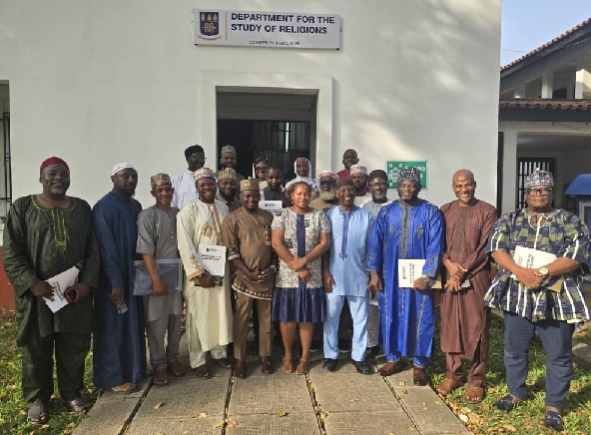
Accra: Selected imams and Muslim chiefs from various communities have undertaken a three-day course on modern leadership skills to address contemporary challenges facing Muslim communities.
The course named “21st Century Imamship”, and organised by the Department for the Study of Religions of the University of Ghana, was designed to update religious leaders on new approaches to leadership, social change, and community development from an Islamic perspective.
“We introduced participants to strategies for bringing about change in their communities, drawing from Islamic principles. We also examined leadership in Islam, including how the Prophet Muhammad (peace be upon him) led his community,” Dr Haruna Zagoon-Sayeed said.
The senior lecturer at the Department for the Study of Religions and coordinator of short courses explained that the course focused on issues of change management, leadership in Islam, the role of women in community development, and the reinterpretation of selected Qur’anic verses that have historically been misunderstood and, in some cases, hindered development efforts.
He noted that Muslim chiefs were deliberately included in the programme due to their influential roles at the community level, adding that their participation would help strengthen efforts to promote socio-economic development.
Dr Zagoon-Sayeed announced plans to institutionalise the initiative, as the department had agreed to organise similar short courses every three months to continually update imams and Muslim chiefs on emerging issues and effective leadership models.
“We expect that from this course, Imams will adopt new ways of mobilising their communities and re-engineer their approaches to development to enhance rapid socio-economic growth,” he added.
Sheikh Mohammed Mutawakil Abubakar, a participant and the Municipal Chief Imam of Adentan, described the programme as an eye-opener, noting that it underscored the importance of personal transformation as a foundation for community change.
“One of the key lessons we learnt is that change starts from within the leader. Before you can change your community, you must first change yourself,” he said.
Sheikh Mutawakil Abubakar said participants were taken through the stages of change, the challenges associated with it, and how to manage and sustain transformation in the face of modern societal problems.
He emphasised that imams must go beyond the confines of the mosque and actively engage in the developmental needs of their communities.
“As Muslims, we should be agents of change and serve as the compass of transformation in our societies,” he stated.
While acknowledging that many Imams are already making efforts in their own capacities, the Chief Imam admitted that much more needs to be done to achieve meaningful impact.
“This course has opened our eyes to new ideas and practical ways of confronting the challenges in our communities,” he said.
He used the opportunity to encourage imams who did not participate in the programme to continuously seek knowledge and skills that go beyond spiritual guidance.
“An Imam’s role is not only to lead people spiritually but also to contribute to the development of the community. Our society is evolving, and we must keep learning to effectively respond to its challenges,” he said.
The organisers expressed hope that the knowledge and strategies shared during the programme would translate into tangible development outcomes across Muslim communities in the country.
Join our whatsapp channel for all the latest updates.
For news coverage, article publication, and advertisement, send an email to ghanaianminaret@gmail.com or reach us via whatsapp, telegram or phone call on +233266666773.